Choosing the best Anesthesia Machine in 2026 is not a matter of buying the newest screen or the longest feature list. The right choice must match clinical workload, staff expertise, available space, and service support. The stakes are real. The Lancet Commission on Global Surgery estimated that five billion people lack access to safe, affordable surgical and anesthesia care. That figure describes a worldwide access gap, not a machine-performance measure, but it underscores why dependable anesthesia delivery matters.
For practical evaluation, buyers should compare ventilation modes, gas delivery, alarm clarity, monitoring integration, and backup options. They should also assess cleaning procedures, staff training, spare-parts availability, and the supplier’s response time. A compact operating room may need a different configuration from a high-volume surgical center. But fit matters. A sophisticated workstation can still be a poor purchase if staff find its controls confusing or local technicians cannot maintain it.
The WHO-WFSA International Standards for a Safe Practice of Anesthesia provide a useful clinical reference. They emphasize trained anesthesia personnel, continuous attendance, and appropriate monitoring. These standards do not rank machines or replace local clinical requirements. Instead, they help buyers ask whether a proposed system supports safe practice. Compare specifications against real procedures, then request a demonstration using familiar workflows. Check service terms in writing. No shortlist is perfect; budget limits, infrastructure, and future needs can pull in different directions. The best choice is the one clinicians can operate reliably, maintain consistently, and support with evidence—not simply the model with the most features.
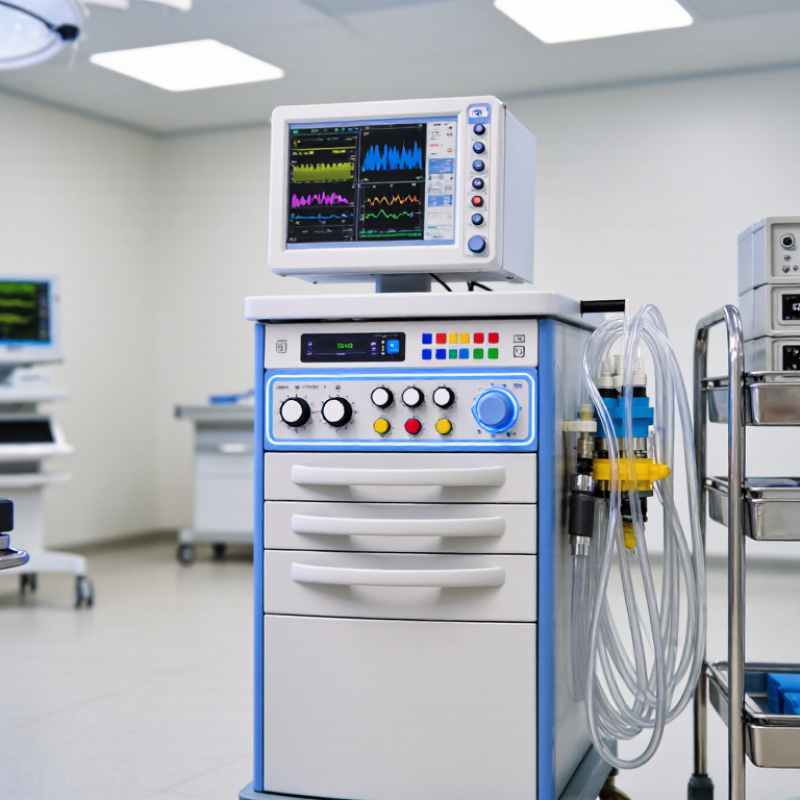
Choosing the best anesthesia machine in 2026 begins with understanding its core functions, not its screen size or purchase price. The machine must deliver controlled oxygen and anesthetic gases, support ventilation, reduce breathing effort, and remove waste gases safely. Its breathing circuit should remain stable during mask ventilation, spontaneous breathing, and mechanical ventilation. Small leaks matter.
The Lancet Commission on Global Surgery reported that about 5 billion people lack access to safe, affordable surgical care. This pressure makes dependable equipment important in both advanced hospitals and resource-limited operating rooms. A practical machine should include accurate flow control, a reliable vaporizer, pressure alarms, battery backup, and a visible oxygen analyzer. It should also support manual ventilation when electronic systems fail. That simple function can save time.
The WHO-WFSA International Standards for a Safe Practice of Anesthesia emphasize continuous monitoring of oxygenation, ventilation, circulation, and temperature. Therefore, a machine should connect easily with independent monitoring equipment rather than acting as a complete safety system. ECRI’s healthcare technology assessments also repeatedly highlight maintenance, alarm usability, and cybersecurity as purchasing concerns. I would not choose a model from specifications alone. Staff should test its controls with gloved hands, inspect cleaning access, and simulate a power interruption. Real-world evaluation is imperfect. It is still better than trusting a brochure.
The best anesthesia machine in 2026 will depend on clinical needs, not the newest feature list. A small outpatient facility may need a compact system, simple controls, and fast cleaning between cases. A large hospital may require advanced ventilation, integrated monitoring, and support for adult, pediatric, and high-risk patients. Patient volume matters too. A machine used ten times daily faces different demands than one used twice weekly.
Walk through the actual operating room before comparing models. Check available space, electrical outlets, backup power, medical gas connections, and network access. Measure doorways and storage areas. Confirm that staff can reach the breathing circuit without awkward movement. Review alarm visibility from the anesthetist’s usual position. Service access is equally important. Delayed repairs can disrupt surgery, even when the purchase price looks attractive. Reliable suppliers should provide training, maintenance schedules, documentation, and responsive technical support.
Tips: Build a needs checklist with surgeons, anesthesia providers, nurses, biomedical engineers, and infection-control staff. Test the interface with real users, not only procurement teams. Ask for a demonstration using your common procedures. Record setup time, alarm clarity, cleaning steps, and battery performance. Do not assume every advanced function improves care. Some features may remain unused, while basic usability gets overlooked. I would also leave room for doubt: projected workloads can change, and technology can age faster than expected. Choose a system that remains understandable during a stressful 3 a.m. emergency.
| Facility or Clinical Profile | Suitable Machine Configuration | Ventilation and Monitoring Needs | Facility Requirements to Confirm | Key Buying Priorities |
|---|---|---|---|---|
| Outpatient or ambulatory surgery Routine adult procedures with predictable patient needs |
A compact workstation with a circle breathing system, vaporizer compatibility suited to the facility’s practice, and a standard patient circuit selection. | A ventilator with modes appropriate to the facility’s case mix; continuous monitoring should be provided through the machine or compatible patient monitors, as required by local policy. | Check pipeline gas availability and pressure, reserve-cylinder arrangements, electrical outlets, scavenging connection, and room layout. | Ease of setup, clear alarms, routine service access, staff training, and a documented plan for equipment failure. |
| General hospital operating room Broad mix of adult and pediatric cases |
A full anesthesia workstation with a circle system, configurable patient circuits, integrated or compatible monitoring, and options aligned with the facility’s typical procedures. | Select ventilation capabilities for the expected patient population and procedures. Confirm monitoring availability for oxygen, ventilation, airway pressure, and anesthetic-agent measurement where clinically required. | Verify pipeline gases, backup cylinders, power and backup-power arrangements, scavenging, network or data connections, and biomedical-engineering support. | Compatibility with existing monitors and consumables, service response times, uptime, alarm usability, and lifecycle costs. |
| High-acuity or tertiary-care operating room Complex cases and patients with significant comorbidities |
A configurable workstation selected with anesthesiology, biomedical engineering, and procurement teams; consider advanced monitoring integration and suitable backup arrangements. | Ensure the available ventilation modes, monitoring interfaces, alarm functions, and data export meet the unit’s clinical workflows and patient mix. | Assess gas-system redundancy, emergency power, scavenging capacity, equipment-network requirements, service coverage, and procedures for planned maintenance. | Interoperability, configurable alarms, availability of technical support, staff competency training, and a verified contingency plan. |
| Pediatric-focused operating room Frequent use for infants or children |
A workstation explicitly specified for the intended patient range, with compatible circuits and accessories for smaller patients. | Confirm that the manufacturer’s stated operating range and the facility’s selected monitoring and ventilation accessories support the anticipated patient sizes and workflows. | Check availability of appropriate circuits, connectors, filters, and consumables; include pediatric-specific setup and training in implementation planning. | Patient-range suitability, low-volume performance stated in the device documentation, accessory availability, and clear alarm interpretation. |
| Resource-limited or remote facility Unreliable infrastructure or limited technical support |
Choose a configuration compatible with locally available gases, electricity, consumables, maintenance skills, and the facility’s approved clinical protocols. | Review how the device behaves during loss of pipeline supply or power, and confirm what alarms, monitoring, and backup ventilation options are available. | Confirm gas-supply reliability, cylinder logistics, voltage and power quality, spare-parts access, service capability, and staff training coverage. | Resilience, repairability, local technical support, predictable consumable supply, and a practical preventive-maintenance plan. |
| MRI or other specialized imaging environment Anesthesia delivered near imaging equipment |
Use only equipment specifically labeled and approved for the intended MRI environment and its defined conditions; standard operating-room machines are not automatically MRI-compatible. | Confirm that monitoring, ventilation, accessories, and alarm visibility are suitable for the clinical workflow and the manufacturer’s stated environmental limits. | Coordinate equipment placement, access, gas delivery, scavenging, cabling, and safety-zone procedures with radiology and MRI safety personnel. | Documented MRI conditions of use, staff training, safe patient access, and compatibility of every component used in the room. |
| Procurement checks for every facility | Compare the complete system configuration—not just the workstation—including monitors, vaporizers, accessories, installation, training, and required service agreements. | Verify local regulatory authorization, applicable electrical and gas connections, room readiness, installation testing, maintenance requirements, and emergency procedures. | The best purchase is the system that meets the facility’s patient and workflow requirements, can be safely supported, and fits the total cost of ownership. | |
Requirements vary by jurisdiction, device configuration, and clinical practice. Confirm specifications and intended use in the manufacturer’s documentation, and involve qualified anesthesia, biomedical engineering, and facilities personnel before purchase.
An anesthesia machine is not one fixed design. A traditional pneumatic unit can suit a stable operating room with trained staff and reliable gas supplies. An electronic workstation adds integrated displays, ventilation modes, and electronic alarms. Compact machines save space for smaller procedure rooms, but limited storage and screen size can make checks less convenient. Small details matter.
Compare the breathing system, vaporizer compatibility, ventilator modes, and backup gas supply. A clear display should show pressure, oxygen concentration, and delivered volume without forcing staff through nested menus. Test alarms with the room lights dimmed and noise present. I would also check how quickly a technician can access filters and replace batteries; purchase specifications rarely capture that frustration.
Safety systems deserve more weight than extra modes. The 2018 WHO-WFSA International Standards for a Safe Practice of Anesthesia identify pulse oximetry, ECG, blood-pressure monitoring, and capnography as key safeguards. Use those four signals as a practical comparison checklist. ISO 80601-2-13:2022 sets safety and essential-performance requirements for anesthesia workstations. Ask for documented alarm tests, leak checks, oxygen-failure response, and service intervals. A polished screen is not proof of reliability. Include local staff training and preventive maintenance in the total cost; those costs are easy to underestimate.
The right anesthesia machine is not automatically the least expensive or most feature-rich. Compare the quoted price with installation, staff training, consumables, maintenance, and expected service life. Ask for a written estimate that separates initial costs from recurring expenses. A low price can look attractive until a required accessory or software update appears on the invoice. That matters.
Compatibility deserves a close, practical review. Check the machine against your facility’s gas supplies, breathing circuits, monitors, scavenging system, and available space. Confirm which accessories are included and which require separate orders. Have clinical engineering and anesthesia staff review the configuration together. A specification sheet may look complete, yet still leave a workflow gap. Check this early.
Support can shape long-term value as much as hardware does. Ask how quickly service is available, whether technicians can support your location, and how replacement parts are handled. Request details on warranty limits, preventive maintenance, and training for new staff. Compare these commitments in writing, not just during a sales discussion. Also consider downtime: a machine that is difficult to service may disrupt schedules even when its purchase price was reasonable. No evaluation is perfect; local workloads, staffing, and budgets differ. Record assumptions, revisit them, and avoid treating projected savings as guaranteed.
Selecting an anesthesia machine in 2026 starts with your facility, not a feature list. Map the cases you perform, room layout, patient-monitoring needs, and available medical gases. A machine that fits a large operating room may crowd a smaller procedure suite. Check alarm visibility from the clinician’s usual position. Test the controls with gloves on. Small details matter.
The Lancet Commission on Global Surgery estimated that five billion people lacked access to safe, affordable surgical and anesthesia care, while 143 million additional procedures were needed annually. That global gap does not tell you which machine to buy, but it underscores why dependable, maintainable equipment matters.
Ask suppliers for service response times, parts availability, training, and documented preventive-maintenance requirements. Confirm compatibility with your facility’s gas connections, electrical supply, monitors, and backup power.
WHO’s Global Patient Safety Report 2024 estimates that one in ten patients experiences harm in healthcare; this is a broad estimate, not a measure of anesthesia-machine risk. Use it as context, not a sales claim.
Arrange a clinical evaluation with staff who will operate the equipment. A spreadsheet can miss awkward tubing, poor screen angles, or confusing alarm controls.
And sometimes the simplest interface is the better choice.
Match it to patient needs, procedure volume, room size, and staff workflow. Newer features are not automatically better.
Measure doorways and storage space. Check outlets, backup power, gas connections, network access, and service access.
Compact size, simple controls, and quick cleaning may matter most. A busy hospital may need broader ventilation and monitoring options.
Request a demonstration with common procedures. Time setup, check alarm visibility, and test cleaning steps and battery performance.
Include installation, training, consumables, maintenance, and expected service life. Ask for a written estimate separating initial and recurring costs. That matters.
Check gas supplies, breathing circuits, monitors, scavenging equipment, and room space. Confirm which accessories are included. Check this early.
Ask about service response times, local technician availability, replacement parts, warranty limits, and preventive maintenance. Get the details in writing.
Consider downtime as well as purchase price. A cheaper unit can disrupt schedules if repairs take too long. Projections can be wrong.
No. Some functions may rarely be used, while basic controls get overlooked. I may still underestimate future needs, so review assumptions regularly.
Choosing the best Anesthesia Machine in 2026 requires more than comparing prices or basic specifications. The right system should support reliable gas delivery, accurate ventilation, effective monitoring, and dependable safety functions throughout a wide range of procedures. Facilities should first assess their clinical workload, patient population, available space, power and gas infrastructure, staff experience, and expected future needs. These factors help determine whether a compact, standard, advanced, or specialized machine is most appropriate.
A careful comparison should include ventilation modes, alarm systems, oxygen monitoring, backup capabilities, workflow design, maintenance requirements, and compatibility with existing equipment. Total cost should also account for installation, consumables, training, servicing, software updates, and long-term reliability rather than focusing only on the purchase price. By balancing clinical performance, safety, usability, technical support, and lifecycle value, healthcare facilities can select an Anesthesia Machine that fits their current requirements while remaining adaptable to future developments in 2026 and beyond.

HUL Healthcare Limited