Choosing a cranial fixation system is a clinical decision, not a catalogue exercise. The right option must match the procedure, anatomy, and surgeon’s technique. It should also provide dependable fixation without adding unnecessary complexity. Small details matter. Plate profile, screw length, material, handling, and compatibility with imaging protocols can all influence the choice.
The scale of head injury helps explain why careful decisions matter. The U.S. Centers for Disease Control and Prevention reported 69,473 traumatic brain injury-related deaths in 2021. That figure describes a broad public health burden; it does not mean every case requires cranial fixation. Harvey Cushing, a pioneer of neurosurgery, wrote, “A physician is obligated to consider more than a diseased organ, more even than the whole man—he must view the man in his world.” His patient-centered principle remains relevant when weighing device options and individual needs.
This guide examines the practical factors behind Cranial Fixation system selection, including fixation strength, implant design, material, and procedural fit. It also considers evidence quality, product documentation, and the limits of comparing devices across different clinical settings. Published market estimates can vary by source and definition, so market size alone is a weak basis for choosing an implant. The better question is whether a system’s documented features suit the planned procedure and the patient. No single system is best for every case.
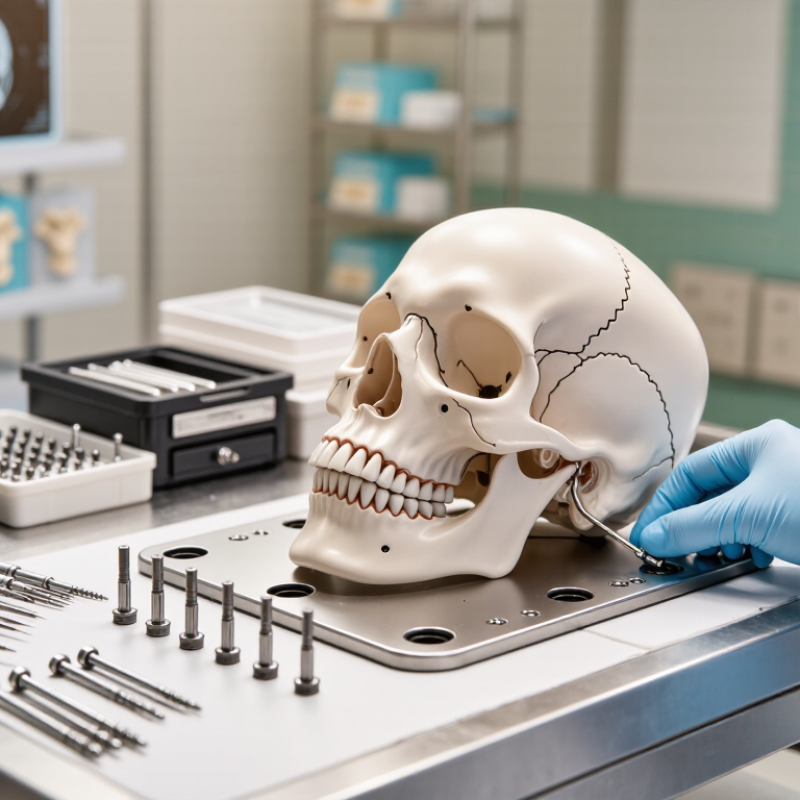
Cranial fixation systems secure bone flaps after craniotomy and stabilize reconstructed skull sections. Their clinical role depends on the patient, surgical site, and expected healing. Common options include titanium plates and screws, resorbable fixation devices, and temporary fixation methods. Each has different handling characteristics and follow-up considerations.
For example, surgeons may consider a low-profile construct when soft-tissue coverage is thin. In growing children, resorbable systems may be considered to avoid leaving permanent hardware, though suitability depends on the case. Fixation must provide stability without obstructing imaging or causing avoidable irritation. Small details matter: plate position, screw length, and the thickness of the surrounding bone. There is no universal choice. That trade-off is real.
The need for careful selection is clear in trauma care. The U.S. Centers for Disease Control and Prevention reported 214,110 TBI-related hospitalizations in 2020; this figure does not mean every patient needed cranial fixation. It does show the scale of serious head injury care. Surgeons assess bone quality, defect size, contamination risk, age, and planned imaging before choosing a system. Published clinical evidence can guide that decision, but outcomes vary across patients and techniques. Some choices remain less straightforward than device descriptions suggest. A multidisciplinary review can help align fixation with the surgical plan and follow-up needs.
Cranial fixation systems serve different purposes. Plates and screws commonly secure a bone flap after craniotomy, while mesh can support irregular edges or small defects. Low-profile titanium plates are rigid and visible on imaging; absorbable systems may suit selected cases where long-term metal implants are not preferred. Details matter.
Fixation methods vary with the procedure and anatomy. Screws anchor plates to bone, and their number and placement depend on the surgeon’s plan and bone quality. Temporary head holders use pins or padded supports to keep the head steady during surgery. Pin-based fixation is not appropriate for every patient, particularly when skull thickness or bone strength raises concern. These methods are not interchangeable.
Choosing among them involves more than comparing materials. Surgeons consider the patient’s age, bone condition, surgical approach, imaging needs, and the forces the repair must withstand. They also check device instructions and established clinical protocols. A neat plate pattern can look reassuring, but appearance alone does not prove stability; fit, screw purchase, and the surrounding bone matter too. Even familiar systems can behave differently in thin or fragile bone.
| System Type | Typical Fixation Method | Common Considerations | Potential Advantages | Limitations and Selection Factors |
|---|---|---|---|---|
| Titanium plates and screws | Low-profile plates bridge the craniotomy cut; screws secure the plates to the bone flap and surrounding skull. | Plate placement, screw length, bone thickness, flap geometry, and the desired degree of rigid fixation. | Provides rigid fixation and allows the surgeon to position fixation points to suit the bone-flap shape. | Permanent metal remains in place. Imaging considerations, palpability beneath thin scalp, and the possibility of later hardware removal may be relevant. |
| Cranial flap fixation clamps | Small clamps engage the edges of the bone flap and surrounding skull, holding the flap in position without conventional plate-and-screw fixation at each point. | Compatibility with the cut geometry, bone thickness, clamp placement, and the required stability. | Can provide a direct edge-based method of securing a bone flap, with fewer separate fixation components in some techniques. | Fit and stability depend on the anatomy and cut. Clamp design and placement options vary; the operating surgeon determines suitability. |
| Absorbable plates and screws | Plates bridge the bone-flap margins and are secured with screws made from absorbable polymer materials. | Patient age, bone quality, expected healing, implant resorption profile, and the need for sustained fixation. | The material is designed to resorb over time, so permanent metallic hardware is not retained. | Resorption takes time, and temporary hardware remains during healing. Mechanical properties and suitability differ by system; use depends on clinical judgment and applicable device instructions. |
| Suture-based fixation | Sutures are passed through prepared holes or other suitable structures to secure the bone flap. | Available bone, flap configuration, suture material, and the stability required for the procedure. | Can offer a non-plate fixation option in selected situations. | May provide less rigid fixation than plate-and-screw constructs, depending on technique and anatomy. It is not appropriate for every craniotomy. |
| Wire fixation | Wire is passed through prepared bone holes and twisted or secured to hold the flap in position. | Bone thickness and quality, wire placement, flap alignment, and the surgeon’s chosen technique. | A mechanically straightforward method that may be considered in selected cases or established surgical approaches. | Can be less convenient to adjust and may not provide the same fixation profile as contemporary plate systems. Suitability is case-dependent. |
Choosing a cranial fixation system starts with the patient, not the catalog. Consider age, bone quality, skull thickness, and any history of previous surgery. A thin or fragile area may call for a different fixation approach than dense bone along a broad, accessible contour. Details matter. Review imaging when available, and assess nearby structures, the planned incision, and the soft tissue that will cover the implant.
The procedure shapes the choice, too. A system used to secure a bone flap may have different demands from one used in cranial reconstruction. The surgeon should consider access, the number and placement of fixation points, instrument handling, and whether the system fits the planned workflow. Low-profile components can help where soft-tissue coverage is limited, but profile alone does not determine suitability. Follow the device instructions and local clinical protocols.
Fit is not everything. A checklist can miss small but meaningful differences in curvature or bone thickness, so the surgical team should review the case together. It is also worth asking whether the selected components are compatible with the intended imaging and follow-up plan. When anatomy is unusual or prior surgery has altered the site, pause and reassess rather than forcing a familiar option.
Material choice affects handling, imaging, and long-term support. Titanium is strong and familiar in many fixation applications, but its stiffness and permanence may not suit every patient or procedure. Absorbable polymers avoid permanent metal hardware, yet their strength changes as they gradually break down. The timing matters. Surgeons should weigh the patient’s age, bone quality, healing needs, and expected follow-up when comparing options.
Compatibility is more than matching a plate to a screw by appearance. Components should be validated for use together, with the correct driver and specified screw lengths. Mixing parts from different systems can create an unreliable fit. Check imaging-related labeling, too: MRI conditions vary by device, even when the material seems familiar. Confirm details against the current instructions for use and local clinical protocols.
Practical features can shape workflow. A low-profile plate may reduce prominence beneath thin scalp tissue, while a compact instrument set can help in a restricted surgical field. Clear size markings, stable screw engagement, and an organized sterile tray are useful details. Small details matter. Yet a feature that speeds placement is not automatically safer or better; handling should be assessed by the surgical team under realistic conditions. Availability of replacement instruments and staff familiarity also deserve attention, though they are easy to overlook.
Selecting a System Through a Structured Clinical Evaluation
A useful evaluation starts with the patient and procedure, not a feature list. Review the planned surgical approach, anatomy, imaging, and expected fixation points. Check whether the system’s profile and components suit the available working space. Fit matters. The team should also consider material compatibility, handling steps, instrument access, and the manufacturer’s instructions for use. Compare these details with relevant clinical evidence, and involve the clinicians who will use the system.
Tips: Before selection, map the procedure from positioning to closure. Confirm that instruments are accessible, components are clearly identified, and staff understand the workflow. Discuss what happens if the planned approach changes. A brief hands-on review can reveal awkward grips or obstructed access that a specification sheet may not show.
Document the reasons for choosing one system over another, including limitations and unanswered questions. Evidence may not address every patient or procedure, so avoid treating one successful case as proof of universal suitability. No checklist removes uncertainty. Revisit the evaluation when techniques, team experience, or patient needs change, and seek specialist input when compatibility or clinical suitability is unclear.
They commonly secure a bone flap after craniotomy. Their placement depends on the surgical plan and bone quality.
Mesh can support irregular edges or small defects. The surrounding bone still matters.
Low-profile titanium plates are rigid and visible on imaging. Absorbable systems may suit selected cases where long-term metal implants are not preferred.
No. Pin-based fixation may raise concerns when skull thickness or bone strength is limited. Padded supports are another type of head holder.
Clinicians consider age, bone condition, surgical approach, imaging needs, and expected forces. Fit matters.
No. Screw purchase and surrounding bone matter too. Appearance alone can mislead.
Review the anatomy, working space, instrument access, and handling steps. A brief hands-on review may reveal awkward grips.
Documentation can record limitations and unanswered questions. One successful case does not prove suitability for every patient.
Revisit it when techniques, team experience, or patient needs change. No checklist removes uncertainty.
Choosing the best Cranial Fixation system requires more than comparing devices; it calls for a careful review of the clinical purpose and the needs of each procedure. Common systems use different fixation methods, and their suitability can depend on the surgical approach, the patient’s anatomy, and the level of stability required. Considering these factors together helps clinicians narrow the options and avoid relying on a single feature in isolation.
Material properties, compatibility with other surgical tools, ease of handling, and practical considerations such as placement and removal may also influence selection. A structured evaluation can help teams compare these features consistently, balance procedural requirements with patient-specific considerations, and choose a system appropriate to the intended clinical use. The final decision should reflect professional judgment and the circumstances of the individual case.

HUL Healthcare Limited