Choosing the right Bone Screws for global sourcing is not a simple price comparison. It is a clinical, engineering, and supply-chain decision. A screw that performs well in dense cortical bone may behave differently in fragile osteoporotic bone. Diameter, length, thread profile, core strength, head design, and cannulation all influence fixation quality. Small details matter. Sometimes, one millimeter matters.
As orthopedic trauma expert Dr. Paul Tornetta III puts it, “Fixation should restore function while preserving biology.” This principle deserves attention during international purchasing. Buyers should examine the intended procedure, bone quality, surgical approach, and compatibility with plates or instruments. Stainless steel and titanium offer different strength, elasticity, imaging, and corrosion characteristics. Coatings may improve handling, but they also require careful technical review.
Reliable sourcing requires more than a polished catalogue. Request material certificates, dimensional inspection reports, fatigue data, sterilization information, and traceability records. Review the supplier’s quality system and production controls. Confirm whether every batch receives consistent marking and packaging. A low quotation may hide weak documentation, unstable lead times, or expensive corrective work later.
The process is rarely perfect.
A sourcing team may overlook packaging damage during an otherwise careful audit. Engineers may prioritize tensile strength while missing insertion torque. Clinical users may prefer a familiar design that purchasing teams cannot source consistently. These gaps should be discussed openly. Global procurement becomes safer when surgeons, quality professionals, engineers, and suppliers review the same evidence. The best Bone Screws are not merely strong; they are appropriate, traceable, compatible, and dependable in real clinical use.
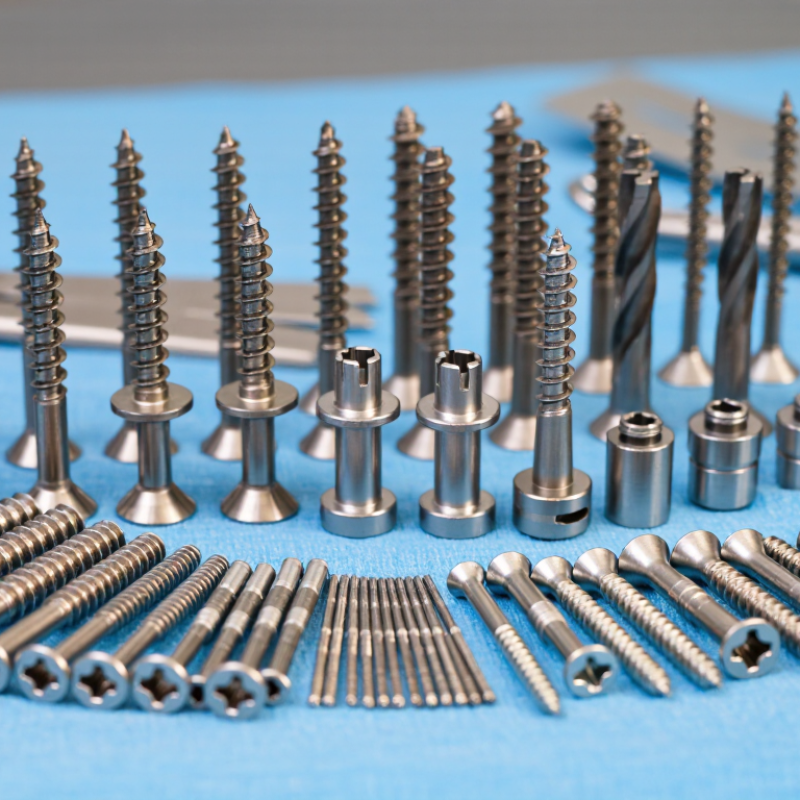
How to Choose the Right Bone Screws for Global Sourcing
Define Surgical Requirements and Bone Screw Specifications
Global sourcing should begin with the procedure, not the supplier’s catalog. Define the fixation site, bone quality, load direction, and intended healing period. A cortical screw for dense diaphyseal bone may fail when used in softer metaphyseal bone. Surgical notes should specify diameter, length, thread profile, head design, drive type, and acceptable tolerances.
Material selection also requires discipline. ASTM F543 covers mechanical testing for metallic bone screws, while ISO 5832-1 addresses wrought stainless steel used in implants. Review tensile strength, torsional performance, fatigue behavior, and corrosion resistance. The FDA’s guidance on orthopedic devices also stresses biocompatibility, sterilization, and design verification. These requirements should appear in the technical agreement, not remain in informal emails.
Tips: Build a requirement matrix before requesting quotations. Include screw dimensions, material grade, coating, packaging, sterilization status, inspection methods, and traceability records. Ask for test reports linked to batch numbers. ISO 10993 biological evaluation may be relevant when materials or coatings contact tissue. Do not rely only on a certificate.
In practice, procurement teams often overvalue unit price. That is understandable, but incomplete. A 2024 orthopedic device market report by Fortune Business Insights estimated continued market growth, increasing pressure on suppliers and buyers. Yet volume does not prove quality. A perfect specification still needs clinical review. Small tolerance changes can affect insertion feel, stripping risk, and fixation stability. Reference standards guide decisions, but surgeon experience must challenge the spreadsheet.
| Requirement Dimension | Typical Specification Options | Selection Guidance | Global Sourcing Checkpoints |
|---|---|---|---|
| Clinical application | Trauma fixation, spinal fixation, maxillofacial fixation, or small-joint reconstruction | Define the anatomical site, fixation purpose, expected loading conditions, and whether the screw is intended for cortical, cancellous, or mixed bone. | Confirm that the product scope, intended use, labeling, and technical documentation match the target market and clinical application. |
| Screw diameter | Common orthopedic ranges include approximately 1.5–2.0 mm for selected small-fragment applications, 2.7–3.5 mm for smaller fixation systems, and 4.0–7.3 mm for many larger-fragment applications. | Choose the smallest diameter that provides the required mechanical performance without compromising bone purchase or causing unnecessary bone removal. | Require dimensional tolerances, thread major diameter records, gauge information, and inspection results for each production lot. |
| Screw length | Specified in millimeters; exact ranges depend on the implant system and anatomical indication. | The selected length should provide adequate thread engagement while avoiding penetration of sensitive structures or excessive protrusion. | Verify how length is measured, including whether the head is included, and request calibrated measurement records. |
| Thread profile | Cortical thread, cancellous thread, variable-pitch thread, locking thread, or partially threaded lag-screw configuration | Cortical threads are generally finer for dense bone; cancellous threads are generally deeper and coarser for softer bone. Partially threaded designs may support interfragmentary compression when used correctly. | Check thread pitch, thread depth, profile geometry, runout, crest condition, and compatibility with the specified plate or nut. |
| Head design | Countersunk, non-countersunk, low-profile, hexagonal, star-drive, or locking-head design | Match the head geometry to the plate interface, soft-tissue requirements, driver system, and required insertion torque. | Inspect head diameter, underside angle, recess depth, drive fit, and resistance to stripping or deformation. |
| Material selection | Implant-grade titanium alloy, commercially pure titanium, cobalt-chromium alloy, or stainless steel selected for implant use | Consider strength, fatigue performance, corrosion resistance, magnetic-resonance requirements, elastic modulus, and compatibility with mating implants. | Request material certificates, heat or melt traceability, chemical composition results, and evidence that the material meets the applicable implant-material specification. |
| Mechanical performance | Insertion torque, removal torque, torsional strength, proof load, pullout performance, and fatigue resistance | Use risk-based acceptance criteria that reflect the screw design, material, bone condition, and intended fixation system. Avoid comparing results from different test methods without checking test conditions. | Review validated test methods, sample quantities, failure modes, acceptance limits, equipment calibration, and lot-release records. |
| Driver and instrument compatibility | Dedicated driver size and geometry, cannulated or solid driver interface, and optional guide-wire compatibility | The driver should seat fully and transmit torque without excessive wobble, bottoming out, or damaging the recess. | Perform fit checks using production-equivalent instruments and verify instrument tolerances, cleaning instructions, and reusable-instrument durability where applicable. |
| Surface finish | Machined, passivated, electropolished, blasted, anodized, or otherwise specified implant surface | Select the finish according to corrosion resistance, tissue-contact requirements, friction, insertion behavior, and any documented biological rationale. | Define roughness limits, visual acceptance criteria, cleaning validation, residue limits, and process controls for any chemical or surface treatment. |
| Sterilization and packaging | Sterile single-use packaging or non-sterile packaging for validated downstream sterilization | The packaging system must protect the screw from damage, contamination, moisture, and mix-ups throughout shipping and storage. | Request packaging validation, seal-strength data, distribution testing, sterilization-cycle records, sterility claims, and shelf-life evidence where applicable. |
| Biocompatibility and cleanliness | Assessment based on patient-contact type, contact duration, material, manufacturing process, and residual substances | Evaluate the finished device, not only the raw material, because machining fluids, residues, surface treatments, and packaging can affect biological safety. | Review biological evaluation, particulate limits, residual-process testing, cleaning validation, and change-control procedures. |
| Regulatory and quality requirements | Applicable medical-device regulations, recognized consensus standards, quality-management requirements, and market-specific registration rules | Define the target countries before finalizing the design, technical file, labeling, and supplier qualification plan. | Verify quality-system certification, regulatory authorization where required, complaint handling, nonconformance control, audit access, and post-market support. |
| Traceability and documentation | Lot number, material batch, manufacturing date, inspection status, packaging status, and unique device identification where required | Traceability should connect the finished screw to raw material, machining, surface treatment, inspection, packaging, and release records. | Include certificates of conformity, inspection reports, deviation approvals, change notifications, and retention periods in the supply agreement. |
| Supplier capability | Precision machining, validated cleaning, controlled finishing, inspection capacity, packaging capability, and stable production volume | Select a supplier that can repeatedly manufacture the complete specification, not only produce acceptable prototypes. | Assess process capability, equipment maintenance, operator training, incoming inspection, final inspection, capacity planning, business continuity, and subcontractor controls. |
| Cost and total landed value | Unit price, tooling, validation, inspection, packaging, sterilization, freight, duties, inventory, and quality-management costs | Compare total landed cost and lifecycle risk rather than unit price alone. A lower price is not beneficial if it increases rejection, delay, or regulatory risk. | Request a transparent quotation, minimum order quantity, lead time, payment terms, warranty conditions, price-adjustment rules, and change-notification commitments. |
Start with the procedure, not a supplier catalog. Specify the fixation site, bone quality, load direction, healing period, diameter, length, threads, head, and drive type.
Dense cortical bone usually needs finer threads and suitable diameter. Softer metaphyseal bone may need deeper threads for stronger purchase. One design cannot fit every anatomy.
Compare strength, torsional performance, fatigue behavior, corrosion resistance, and imaging effects. Titanium alloys may create fewer imaging artifacts. Stainless steel can remain practical for selected applications.
Locking screws support plate stability but require accurate angle control. Cannulated screws help guidewire placement. Their hollow core may reduce mechanical strength. That trade-off deserves attention.
Review coating thickness, adhesion, particle release, and sterilization effects. Some coatings may support bone attachment. Biological testing alone does not prove clinical success.
Request material certificates, dimensional inspection records, coating results, sterilization validation, and test reports. Link every report to its batch number. Traceability matters.
Not always. A lower price may conceal inspection, rejection, or documentation costs. Compare fatigue data and total quality costs, not price alone.
Include dimensions, material grade, coating, packaging, sterilization status, inspection methods, and traceability requirements. Put these details in the technical agreement. Informal emails are easy to misunderstand.
Small tolerance changes can affect insertion feel, stripping risk, and fixation stability. Reference standards guide decisions, but clinical experience must challenge the spreadsheet. The specification may still be imperfect.
Choosing the right Bone Screws for global sourcing begins with clearly defining the intended surgical application, anatomical requirements, screw dimensions, thread patterns, fixation strength, and compatibility with related instruments or implants. Buyers should then compare materials, structural designs, surface finishes, and coating options according to biocompatibility, mechanical performance, corrosion resistance, and sterilization needs. A careful evaluation helps ensure the selected product is suitable for its intended clinical use and manufacturing environment.
Before placing an order, verify the supplier’s quality systems, technical documentation, testing records, and compliance with applicable medical device standards in the target markets. Pricing should be assessed together with minimum order quantities, lead times, logistics reliability, inventory capacity, and potential supply chain risks. Finally, inspect samples, confirm dimensional and performance consistency, review packaging and traceability procedures, and conduct a structured supplier qualification process. This approach supports informed purchasing decisions, reduces avoidable sourcing risks, and helps establish a dependable long-term supply relationship.

 HUL Healthcare Limited