How to Choose the Right Joint Prosthesis Manufacturer?

Time:2026-09-10 Author:Oliver
0%

Choosing the right Joint Prosthesis manufacturer is not simply a purchasing decision. It is a long-term clinical and operational judgment.

The American Joint Replacement Registry (AJRR) Annual Report 2024 recorded more than 3.5 million hip and knee procedures. Its data also highlight the importance of tracking revision rates, patient age, implant type, and surgical outcomes. These details matter. A polished product brochure cannot replace evidence from real patients.

Market forecasts provide useful context, but they should not decide your shortlist. Grand View Research estimates continued global growth in joint replacement demand through the next decade. However, market size does not prove implant quality. Reports may also use different definitions, regions, and time periods. That weakness deserves attention.

Dr. Steven M. Kurtz, a recognized researcher in joint-replacement outcomes, has emphasized: “Long-term follow-up is essential to understanding implant performance.” His point should shape every manufacturer evaluation. Ask for registry participation, peer-reviewed clinical evidence, sterilization controls, traceability records, and transparent complaint handling. Examine how the company responds when an implant performs poorly.

A reliable manufacturer should explain its material choices, design testing, and five-year or ten-year outcomes clearly. Look beyond the conference display. Review the technical file, packaging integrity, surgeon training, and supply continuity. Speak with hospitals that have used the system for several years.

There is no universally best manufacturer. Patient anatomy, surgical technique, and postoperative care also influence results. That is the uncomfortable part. A careful decision combines evidence, experience, and honest uncertainty.
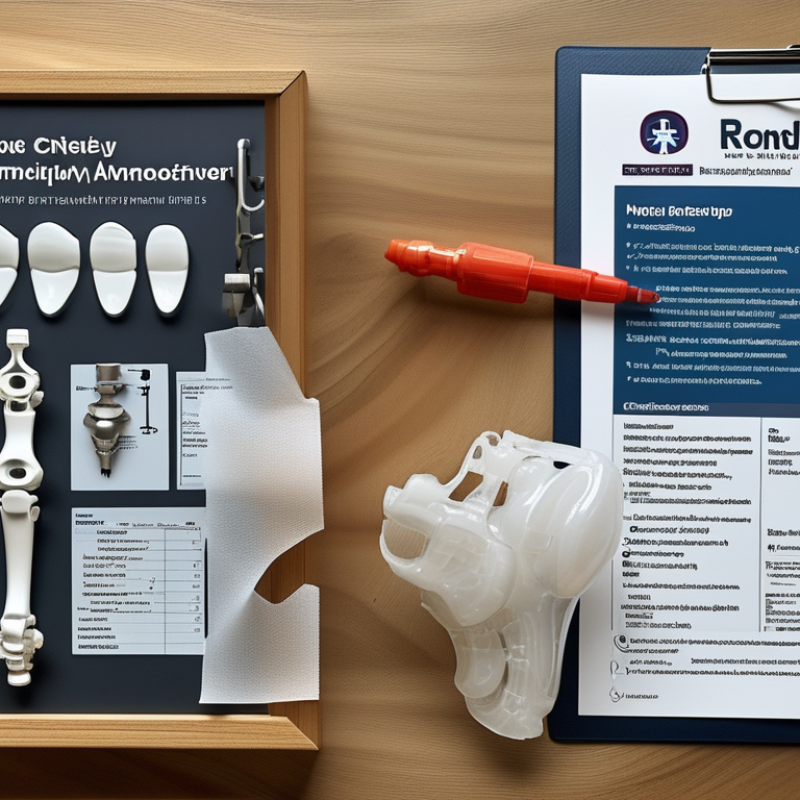
How to Choose the Right Joint Prosthesis Manufacturer?

Understanding Joint Prosthesis Types and Clinical Requirements

How to Choose the Right Joint Prosthesis Manufacturer?

Understanding Joint Prosthesis Types and Clinical Requirements

Choosing a joint prosthesis begins with the patient, not the catalogue. Total hip and total knee systems serve different anatomical and functional demands. Partial replacements may preserve healthy tissue in carefully selected cases. Revision implants require stronger fixation and greater design flexibility. Bone quality, joint stability, activity level, age, and expected rehabilitation all influence the decision.

Clinical teams should examine the prosthesis materials, fixation method, bearing surface, and size range. Cemented fixation can support some patients with poor bone quality. Cementless fixation may suit others with sufficient bone growth potential. Imaging should confirm anatomy before surgery. Trial components must also provide practical intraoperative options. Small details matter, such as instrument accuracy and compatibility with existing surgical workflows.

Manufacturer assessment should include documented testing, traceability, sterilization controls, and post-market surveillance. Clear technical training is valuable, especially when a system has several component choices. Surgeons should review clinical evidence relevant to the intended procedure, not rely on general claims. Hospital engineers and procurement teams can examine supply stability and complaint-handling records. No design fits every patient. Even experienced teams can misjudge soft-tissue balance or underestimate revision difficulty. That risk deserves honest discussion. A reliable choice combines suitable prosthesis types, verified quality systems, and clinical requirements that match the real operating environment.

Evaluating Manufacturer Quality, Certifications, and Production Standards

When choosing a joint prosthesis manufacturer, begin with evidence, not polished brochures. Ask for current certificates, their scope, and issuing bodies. ISO 13485 certification should cover the relevant devices and production sites. Check renewal dates, audit findings, and corrective action records. A certificate alone does not prove consistent quality. It is only an entry point.

Walk through the production process when possible. Look for controlled machining areas, calibrated measuring tools, and documented cleanliness checks. Inspect how components are identified from incoming inspection to final release. Each lot should have clear traceability. Ask how surface finish, dimensional tolerances, packaging, and sterilization are validated. Request sample batch records with confidential details removed. Small details matter. For example, unclear label control can create serious confusion during recalls or clinical investigations.

Reliable manufacturers monitor complaints, nonconforming products, supplier performance, and corrective actions. They should explain how engineers review design changes before production begins. Ask whether critical suppliers receive regular audits, especially those handling coatings, sterilization, or precision machining. During a technical review, compare written procedures with actual operator practices. They may not match perfectly. That difference deserves careful discussion, not automatic rejection. An audit can also create false confidence if questions remain too general. I once overlooked subcontracted surface treatment during a supplier assessment. The main factory looked excellent, but the external process needed stronger verification. A careful manufacturer should welcome difficult questions and provide measurable answers.

Comparing Materials, Design Options, and Customization Capabilities

Choosing a joint prosthesis manufacturer requires more than comparing prices or catalog images. Material selection should match the joint, patient anatomy, activity level, and expected loading. Titanium alloys are often valued for their lower weight and bone integration potential. Cobalt-chromium alloys offer strength and wear resistance. Ceramic bearings can reduce friction, but they require careful design and handling. Polyethylene remains widely used for its balanced performance. No material is perfect.

Design options deserve close inspection. A manufacturer should provide cemented and uncemented solutions where clinically appropriate, along with modular sizes and reliable locking mechanisms. Surgeons may also need different constraint levels, offset choices, or bearing combinations. Small details matter. A few millimeters can affect stability, movement, and soft-tissue tension. Clear sizing charts, trial components, and surgical instrumentation can make operating-room decisions more predictable. Still, a larger menu does not automatically mean better engineering.

Customization capabilities should include imaging-based planning, patient-specific guides, and adaptable implant geometry. Ask how CT data is converted into a design, who approves modifications, and how each component is traced through production. Evidence from mechanical testing, biocompatibility assessments, sterilization controls, and clinical follow-up should be available in understandable language. I would not treat a polished brochure as proof. Some customization claims sound impressive but lack measurable outcomes. A dependable manufacturer welcomes technical questions, documents limitations, and keeps communication consistent when a design needs revision.

Assessing Clinical Evidence, Surgeon Support, and Patient Safety

How to Choose the Right Joint Prosthesis Manufacturer?

Assessing Clinical Evidence, Surgeon Support, and Patient Safety

A reliable manufacturer should provide more than impressive product claims. Look for peer-reviewed studies, national joint registries, and transparent revision-rate data. Evidence should match the proposed joint, patient group, and surgical technique. A five-year result may look encouraging, but longer follow-up can reveal loosening, wear, or unexpected revisions. No dataset is perfect. Check study size, conflicts of interest, and missing patient outcomes.

Surgeon support also affects clinical performance. Ask whether surgeons receive practical training, instrument guidance, and prompt technical assistance. A familiar implant system may reduce confusion during surgery. However, convenience should not replace independent evaluation. Hospitals should review the learning curve, instrument availability, and emergency replacement procedures. Speak with surgeons who have used the system in ordinary operating rooms, not only demonstration settings.

Patient safety requires careful attention before and after implantation. The manufacturer should explain material composition, sterilization controls, batch traceability, and reported adverse events. Clear patient information supports realistic consent, including possible pain, infection, instability, and revision surgery. Postoperative monitoring matters too. Manufacturers that support structured follow-up can help identify problems earlier. A polished brochure can still hide important gaps. Review the evidence directly, question unclear claims, and document every decision in the patient’s record.

Reviewing Costs, Supply Reliability, and Long-Term Service

Choosing a joint prosthesis manufacturer requires more than comparing unit prices. Procurement teams should calculate the complete cost. Include implants, instruments, freight, training, storage, expiry, and revision support. The 2024 AJRR Annual Report covers more than three million hip and knee procedures. That scale shows the value of registry-level evidence. Ask for revision rates by model, follow-up period, patient group, and denominator. Otherwise, “long-term results” may sound precise but remain incomplete.

Supply reliability needs measurable proof. Request recent on-time delivery rates, back-order frequency, safety-stock policies, and recovery times. The U.S. FDA’s medical-device supply-chain work emphasizes visibility across critical suppliers and manufacturing stages. A promise of continuous supply is not enough. Review lot traceability, field-action communication, and contingency production sites. Ask for the previous twelve months of records. This detail can expose fragile capacity.

Long-term service includes surgeon training, instrument replacement, complaint handling, and revision support. ISO 13485 certification supports controlled quality systems, but it does not guarantee responsive service. The National Joint Registry’s 21st Annual Report uses millions of procedure records to support longer-term revision analysis. Demand a named service contact, response targets, and regular outcome updates. Leave room for uncertainty. Early results can change as evidence matures. A cheaper contract may become costly when support is slow.

FAQS

: How should a hospital choose a joint prosthesis?

: Start with the patient’s anatomy and clinical needs. Consider bone quality, stability, age, activity, and rehabilitation goals. Total and partial replacements serve different situations. No single design fits everyone.

When might a revision prosthesis be appropriate?

Revision implants may need stronger fixation and flexible component choices. They can address complex bone loss or failed previous implants. Imaging and surgical planning remain essential. Revision surgery is rarely simple.

How do fixation methods differ?

Cemented fixation may support patients with weaker bone. Cementless fixation may suit patients with good bone-growth potential. The choice depends on imaging and clinical judgment. A general rule can mislead.

What should be checked before surgery?

Imaging should confirm bone shape and joint anatomy. Trial components should offer useful size options. Instruments must fit the surgical workflow. Small measurement errors can affect soft-tissue balance.

Which quality documents should a manufacturer provide?

Request current certificates and confirm their scope. Check production sites, renewal dates, audit findings, and corrective actions. ISO 13485 certification is only an entry point. It does not prove perfect consistency.

What production details deserve close inspection?

Review machining controls, calibrated tools, cleanliness checks, and batch traceability. Examine packaging, surface finish, sterilization, and dimensional tolerances. Ask for redacted batch records. Labels should remain clear during recalls.

How can clinical evidence be evaluated?

Look for peer-reviewed studies, registry data, and transparent revision rates. Evidence should match the joint, patient group, and surgical technique. Five-year results may miss later loosening or wear. Longer follow-up matters.

What support should surgeons and patients receive?

Surgeons need practical training, instrument guidance, and prompt technical assistance. Hospitals should check emergency replacement procedures and instrument availability. Patients need clear information about pain, infection, instability, and revision surgery. Follow-up can reveal problems earlier.

Conclusion

Choosing the right Joint Prosthesis manufacturer requires a careful review of both clinical needs and long-term reliability. Begin by identifying the appropriate prosthesis type for the target joint, patient condition, anatomy, and surgical approach. Then evaluate the manufacturer’s quality management system, regulatory certifications, production controls, sterilization procedures, and traceability standards. Materials, implant design, sizing options, and customization capabilities should also be assessed to ensure compatibility with different patient requirements and surgical techniques.

A reliable manufacturer should provide credible clinical evidence, transparent performance data, comprehensive surgeon education, and responsive technical support. Patient safety depends on rigorous testing, consistent manufacturing, clear instructions, and effective post-market monitoring. In addition to product quality, healthcare providers should compare total costs, delivery schedules, inventory capacity, and supply continuity. Long-term service, including training, documentation, complaint handling, and replacement support, can significantly influence clinical outcomes and operational efficiency. A balanced evaluation of these factors helps hospitals and surgeons select a dependable partner rather than focusing only on the initial purchase price.

Oliver

Oliver

Oliver is a seasoned marketing professional with a wealth of expertise in driving brand awareness and engagement. With a deep understanding of our company's product offerings, he consistently delivers high-quality content that enriches our professional blog. His insights not only shed light on......