China’s orthopedic manufacturing sector has expanded rapidly, serving hospitals, distributors, and surgical specialists worldwide. This introduction examines China’s top 10 Orthopedic Devices suppliers through practical and evidence-based criteria. These criteria include product quality, regulatory documentation, manufacturing capacity, clinical experience, and after-sales support.
Orthopedic surgeon and implant researcher Dr. Joshua J. Jacobs has emphasized that implant quality, surgical technique, and patient selection must be considered together. His view remains highly relevant when comparing suppliers. A polished product brochure cannot replace validated testing, traceable materials, or dependable clinical support. Look closely.
The companies discussed may produce joint implants, trauma fixation systems, spinal products, surgical instruments, or digital orthopedic technologies. Some focus on domestic hospitals. Others have stronger international distribution networks. Their strengths are not identical, and that difference matters. A supplier with advanced machining may still lack global registration experience. Another may offer broad product lines but limited published clinical evidence.
This overview does not treat market size as proof of medical reliability. It considers available certifications, quality systems, research activity, production consistency, and customer feedback. Verification remains necessary. Supplier rankings can change as regulations, technologies, and hospital needs evolve. That is an imperfect reality.
Readers should review current approvals in their target market before making purchasing decisions. They should also confirm sterilization controls, implant materials, instrument compatibility, and complaint-handling procedures. These details often determine whether a supplier performs well beyond the showroom. The list offers a starting point, not a substitute for professional evaluation.
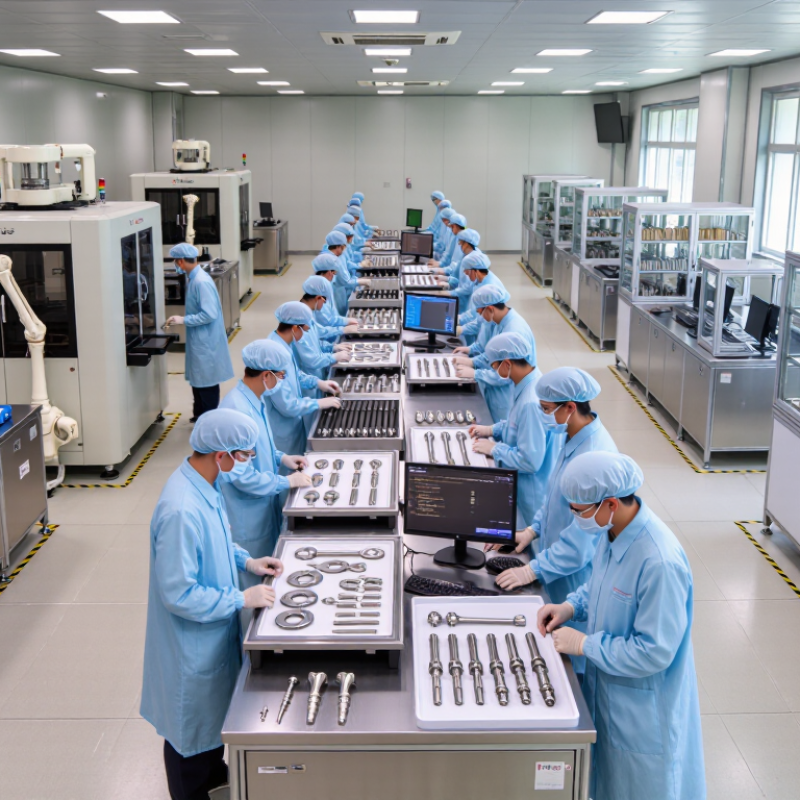
China’s orthopedic device suppliers cover more than implant manufacturers. They may produce trauma plates, joint replacement components, spinal systems, surgical instruments, casting materials, and rehabilitation equipment. Some firms also provide sterilization, packaging, technical training, and after-sales support. That distinction matters.
For a practical “top 10” assessment, the scope should include manufacturers, authorized distributors, contract producers, and specialized component suppliers. Evaluation should examine product registration, quality systems, traceability, clinical evidence, manufacturing capacity, and export experience. A reliable supplier can explain material grades, sterilization methods, shelf life, and batch controls without vague claims. Factory audits should include clean areas, inspection records, calibration logs, and employee training. Paperwork is not proof.
Procurement teams should also review delivery stability and complaint handling. Ask how quickly a supplier responds to a damaged package or an inconsistent measurement. This reveals operational maturity. A supplier may offer advanced products but lack dependable technical service in smaller hospitals. Another may have strong production skills but limited evidence for a specific clinical use. These weaknesses deserve honest attention. No directory is perfect. Buyers should verify current certificates, product specifications, and local distribution permissions before making comparisons. Price alone can hide costs linked to training, inventory, maintenance, and delayed support. Experienced evaluation combines documents with factory observations and conversations with surgeons, engineers, and hospital purchasers. That approach makes the definition of a qualified supplier more useful than a simple sales ranking.
China Top 10 Orthopedic Device Suppliers?
Evaluating Chinese orthopedic device suppliers requires more than comparing prices or product catalogs. Start with their quality management system, especially ISO 13485 certification and documented production controls. Check whether certificates match the actual factory address. That detail matters. A reliable supplier should provide traceability from raw material intake to final packaging. Review batch records, inspection reports, and sterilization validation. Ask how quickly they investigate complaints and issue corrective actions.
Product evidence deserves close attention. Examine design files, mechanical testing, biocompatibility data, and clinical references for the intended device. Confirm whether regulatory registrations support your target market, such as NMPA, CE, or FDA requirements where applicable. Do not accept a generic test report without checking its scope. An experienced evaluator should request samples from normal production, not specially prepared units. Small differences in surface finish, thread accuracy, or packaging can affect surgical handling.
Visit the facility when possible. Observe cleanroom behavior, calibration labels, operator training, and inventory control. A polished audit file can still hide weak daily practices. That is worth questioning. Review production capacity against actual delivery promises, including tooling, inspection time, and contingency plans. Communication also reveals expertise: technical staff should explain tolerances clearly, admit limitations, and respond with evidence. Price is only one variable. Long-term reliability depends on documentation, consistent manufacturing, transparent communication, and practical support after delivery. Suppliers should also protect confidential design information through clear written agreements.
China’s Top 10 Orthopedic Device Suppliers should be assessed through evidence, not publicity. Grand View Research estimates the global orthopedic devices market reached about US$47.4 billion in 2023. It projects a 4.9% compound annual growth rate through 2030. China’s growing surgical volume creates strong demand for trauma, spine, joint, and sports-medicine products.
A credible top-ten review should examine NMPA registration records, hospital procurement results, clinical evidence, and manufacturing consistency. The NMPA 2023 Annual Report highlights stricter device oversight and stronger post-market monitoring. Suppliers with complete traceability, stable sterilization processes, and responsive technical support deserve closer attention. Price alone misleads. A lower quotation may hide training gaps, limited inventory, or weak follow-up service. Evidence matters.
Public annual reports and China Medical Device Industry Association data can also reveal research investment, domestic production capacity, and export readiness. Yet rankings remain imperfect. Hospital purchasing differs between coastal cities and rural regions. A supplier trusted for trauma plates may not lead in spinal systems. Buyers should compare revision rates, surgeon feedback, delivery records, and complaint handling over several years. Some market data also relies on self-reported company figures, so independent verification remains necessary. The strongest candidates combine regulatory discipline with practical operating experience. Still, no supplier should be judged by scale alone.
China’s leading orthopedic device suppliers cover a broad range of clinical needs. Their product categories include trauma plates, locking screws, intramedullary nails, joint implants, spinal fixation systems, and sports medicine instruments. Some suppliers also provide surgical power tools and custom procedure kits. These products support fracture repair, joint replacement, spinal stabilization, and minimally invasive procedures.
Material engineering is a major development area. Titanium alloys offer strength and corrosion resistance. PEEK components support selected spinal applications. Porous surfaces can encourage bone integration. Several manufacturers use additive manufacturing for complex implant structures. Digital planning, surgical navigation, and patient-specific guides are also becoming more common. These technologies may improve positioning, but clinical value still depends on training and workflow.
Details matter.
Experienced buyers examine fatigue testing, sterilization controls, dimensional accuracy, and batch traceability. They also review clinical evidence, technical documentation, and post-market feedback. A supplier with a large catalog is not automatically the most reliable choice. Product maturity can differ between categories. Some systems appear advanced but have limited long-term data. Hospital teams should compare surgeon experience, instrument ergonomics, revision support, and supply stability. In practice, a well-designed implant can still perform poorly when instruments are confusing or staff training is incomplete. Supplier evaluations therefore need laboratory evidence, operating-room feedback, and honest discussion of remaining weaknesses.
China Top 10 Orthopedic Device Suppliers?
When evaluating China’s top orthopedic device suppliers, regulatory compliance should guide every shortlist. Companies should provide valid registrations, product certificates, and traceable technical documentation. Manufacturing sites need documented quality systems, controlled environments, and trained inspection staff. Standards matter.
Quality control must extend beyond final inspection. Auditors should review incoming material checks, machining records, sterilization controls, and packaging tests. For implants and instruments, dimensional accuracy is critical. A small surface defect may affect surgical handling or long-term performance. Suppliers should also maintain batch records, complaint procedures, and corrective-action reports.
Market fit requires more than a competitive quotation. Buyers should examine production capacity, lead times, customization limits, and after-sales communication. Local support can reduce delays when technical questions arise. Sample evaluation is essential. A polished sample may hide unstable mass production. This happens.
A responsible review should include factory visits, independent testing, and references from comparable markets. Documents can look complete but still lack practical detail. I would question unclear material certificates, changing specifications, or pressure to skip verification. No ranking stays accurate forever. Regulations, capacity, and supplier performance can change within months. Careful buyers should reassess evidence before signing long-term agreements.
| Profile | Primary Orthopedic Focus | Typical Device Classification in China | Core Regulatory Requirements | Key Quality-Control Practices | Evidence Commonly Requested by Buyers | Market Considerations |
|---|---|---|---|---|---|---|
| 01 | Large-joint replacement systems | Generally Class III for implantable hip and knee systems | NMPA registration; applicable GB 23101 series; biocompatibility assessment under GB/T 16886; documented clinical evaluation or clinical-trial evidence where required | Material verification, dimensional inspection, surface-finish testing, sterilization validation, packaging integrity, and lot traceability | Registration certificate, technical requirements, inspection reports, sterilization records, shelf-life data, and adverse-event procedures | Hospital access, surgeon preference, clinical data, instrument compatibility, and exposure to volume-based procurement |
| 02 | Spinal fixation and interbody systems | Generally Class III for implantable spinal systems | NMPA registration; applicable national and industry standards; risk management aligned with YY/T 0316; clinical and mechanical-performance documentation | Fatigue, static-strength, torsion, pull-out, locking-mechanism, pore or coating, and instrument-function testing | Mechanical test reports, material certificates, design-verification records, sterilization validation, and change-control history | Demand is influenced by degenerative-spine surgery, trauma care, surgeon training, tender qualification, and instrument availability |
| 03 | Trauma plates, screws, nails, and external fixation | Implantable trauma products are commonly Class III | NMPA registration; applicable trauma-implant standards; material, mechanical, biological, packaging, and sterilization requirements | Computerized dimensional control, torque testing, corrosion assessment, surface inspection, incoming-material verification, and batch release | Product technical requirements, batch inspection reports, raw-material certificates, UDI-related records where applicable, and complaint handling | Broad hospital coverage, emergency availability, SKU breadth, fast delivery, and competitive tender pricing are important |
| 04 | Sports-medicine anchors, interference screws, and repair devices | Implantable products are usually Class III; some accessories may have different classifications | NMPA registration or filing according to product type; biological safety, mechanical performance, and sterilization documentation | Pull-out strength, cyclic loading, suture or fixation strength, dimensional accuracy, particulate control, and packaging validation | Performance reports, material disclosure, shelf-life evidence, surgical-technique documentation, and training support | Growth depends on sports participation, hospital specialization, surgeon adoption, and availability of complete procedure kits |
| 05 | Dental and maxillofacial orthopedic implants | Implantable systems are commonly Class III | NMPA registration; applicable implant standards; biological evaluation, sterilization, packaging, and clinical evidence as required | Titanium or alloy composition testing, surface-treatment verification, dimensional inspection, cleanliness control, and fatigue testing | Registration documents, chemical-composition reports, surface-treatment records, sterilization validation, and traceability records | Procurement is affected by dental-clinic networks, hospital channels, clinician training, and regional tender policies |
| 06 | Orthopedic surgical instruments and instrument trays | Classification varies by intended use; reusable surgical instruments may be Class I, II, or III | NMPA classification confirmation, applicable product standards, cleaning and reprocessing instructions, and validation of intended use | Dimensional checks, hardness testing, corrosion resistance, functional testing, cleaning validation, and repeated-use durability assessment | Product registration or filing evidence, inspection reports, reprocessing instructions, compatibility information, and maintenance guidance | Compatibility with implant systems, tray completeness, ergonomic design, repair service, and turnaround time influence purchasing |
| 07 | Porous, coated, and additive-manufactured implants | Usually Class III when permanently implantable | NMPA registration with process-specific verification; biological safety, mechanical performance, manufacturing-process validation, and clinical evidence where applicable | Pore-size and porosity measurement, coating adhesion, roughness, residual-powder control, cleanliness, fatigue testing, and CT or metallographic inspection | Validated process parameters, inspection plans, equipment qualification, material traceability, and long-term stability data | Differentiation depends on clinical evidence, manufacturing repeatability, surgeon confidence, and cost of advanced production |
| 08 | Biomaterials and custom orthopedic implant manufacturing | Final patient-specific implant products are commonly Class III | Product-specific NMPA pathway; design-control records, patient-specific manufacturing controls, biological evaluation, and clinical justification | CAD-to-production verification, build-file control, dimensional scanning, material testing, sterilization, and patient-order traceability | Design history, approved drawings, manufacturing records, inspection data, case-specific approval, and post-market surveillance procedures | Clinical workflow integration, design lead time, engineering support, surgeon collaboration, and reimbursement environment are decisive |
| 09 | Orthopedic consumables and sterile procedure kits | Classification depends on whether components are implantable, invasive, sterile, or reusable | Applicable NMPA registration or filing; sterile-device packaging, sterilization, shelf-life, and labeling requirements | Sterility assurance, seal-strength testing, particulate control, visual inspection, environmental monitoring, and lot-release testing | Sterilization dose or cycle records, packaging validation, certificate of analysis, shelf-life report, and batch traceability | Reliable supply, low stock-out risk, kit customization, hospital logistics, and price transparency are major considerations |
| 10 | Export-oriented orthopedic contract manufacturers | Classification follows the destination market and intended use; implantable products are generally high-risk | Chinese manufacturing compliance plus destination-market requirements such as ISO 13485-based quality systems, technical documentation, and authorized-representative obligations where applicable | Supplier qualification, process validation, statistical process control, nonconformance management, CAPA, audit trails, and design-transfer controls | ISO 13485 certificate, audit reports, inspection plans, validation protocols, regulatory history, and change-notification procedures | Export experience, documentation quality, intellectual-property protection, minimum order quantities, lead time, and regulatory support affect suitability |
Assess registrations, hospital procurement results, clinical evidence, and manufacturing consistency. Publicity is not enough. Evidence matters.
Request valid registrations, product certificates, and traceable technical files. Check whether specifications match the supplied products. Missing details deserve questions.
Review material inspections, machining records, sterilization controls, and packaging tests. Batch records and corrective-action reports should be available. Small defects matter.
Problems can begin with incoming materials or unstable production settings. Inspect the complete process, not only the finished implant. This is easy to overlook.
Visit the factory, review several production batches, and arrange independent testing. Compare polished samples with mass-produced items. Samples can mislead.
Not always. A low price may hide limited inventory, weak training, or slow technical support. Delivery records matter too.
Check response times, local technical support, complaint handling, and replacement procedures. Ask comparable hospitals about real service experiences. Paper promises are weaker.
No ranking stays accurate forever. Capacity, regulations, and performance can change within months. I would reassess evidence before a long-term agreement.
No. Some figures may come from self-reported company information. Compare annual reports, industry data, hospital feedback, and independent records. My caution may be excessive, but verification remains sensible.
This article presents a practical overview of China’s top 10 orthopedic device suppliers, focusing on how they support hospitals, clinics, distributors, and healthcare professionals. It defines the scope of orthopedic device suppliers, including manufacturers and solution providers involved in implants, surgical instruments, trauma products, spinal systems, joint replacement products, and rehabilitation equipment. The ranking approach considers product quality, manufacturing capacity, research and development, certifications, customization, service, delivery reliability, and international market experience.
The article also compares the product categories and technologies offered by leading suppliers, such as trauma fixation, spinal treatment, joint reconstruction, minimally invasive tools, and digital surgical support. In addition, it explains the importance of regulatory compliance, quality management systems, clinical evaluation, traceability, sterilization controls, and consistent inspection procedures. Buyers are encouraged to assess each supplier according to intended use, technical requirements, after-sales support, pricing, and local registration conditions before selecting suitable Orthopedic Devices.

HUL Healthcare Limited