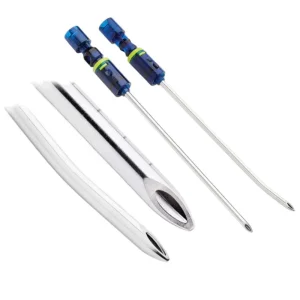
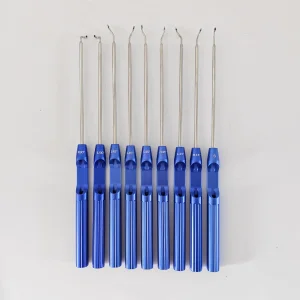
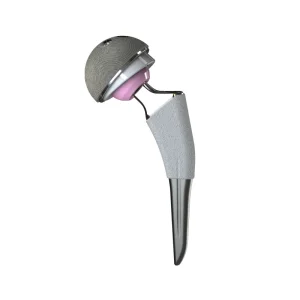
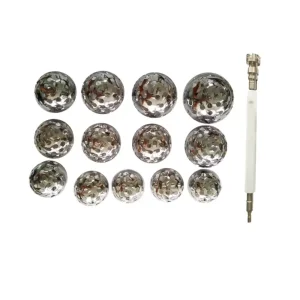
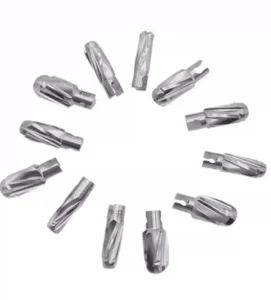
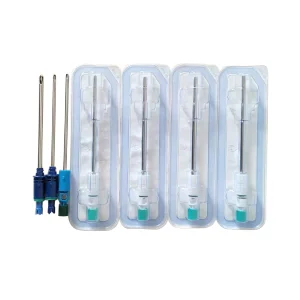
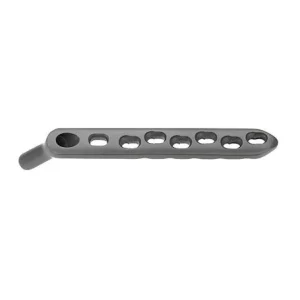
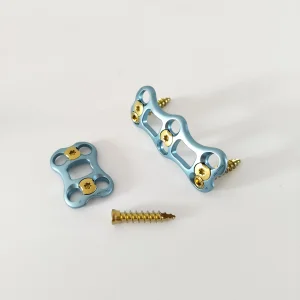
Explore our top-tier CE-certified surgical instruments, prostheses, and implant systems designed for precise clinical outcomes.
Interlocking intramedullary (IM) nailing has long established itself as the gold standard for the treatment of diaphyseal fractures of long bones, particularly the femur, tibia, and humerus. By combining the biomechanical advantages of an intramedullary load-sharing device with the rotational stability offered by locking screws, modern interlocking nails facilitate early weight-bearing and accelerate fracture union.
From a mechanical standpoint, an interlocking nail acts as an internal splint that aligns the bony fragments while permitting micro-motion under axial loads. This controlled micro-motion stimulates callus formation (secondary bone healing), which is biologically superior and faster compared to the primary bone healing induced by rigid compression plating. The insertion of proximal and distal interlocking screws through the nail secures the rotational control and prevents telescoping of unstable or comminuted fractures. This ensures that anatomy is restored and maintained under physiologic stress.
The field of orthopedic implants is witnessing rapid technological advancement, driven by the demands of minimally invasive surgery (MIS), reduced radiation exposure for surgical teams, and superior anatomical alignment. Leading global manufacturers and exporters are prioritizing the following trends:
Modern nails feature multi-planar bends that mirror the natural anteroposterior and mediolateral curvatures of human and animal long bones. This design reduces insertion force, prevents cortical impingement, and eliminates the risk of secondary fractures during implant insertion.
To address distal and proximal metaphyseal fractures, next-generation systems integrate advanced locking configurations. These include dynamic, static, and angular-stable options that accommodate multi-directional locking screws, providing rigidity in osteoporotic or severely comminuted bone.
Type II anodization and micro-arc oxidation (MAO) processes are applied to titanium nail surfaces to improve wear resistance, limit ion release, and promote soft tissue compatibility, decreasing the incidence of post-operative infection.
Orthopedic surgeons choose implant materials based on mechanical characteristics, biocompatibility, and imaging compatibility. Below is a clinical comparison between the two primary materials used in modern interlocking nails:
| Property | Titanium Alloy (Ti-6Al-4V ELI) | Stainless Steel (316L) | Clinical Impact |
|---|---|---|---|
| Modulus of Elasticity | ~110 GPa (Closer to cortical bone) | ~200 GPa | Titanium reduces stress shielding, promoting physiological load sharing and healthier callus formation. |
| Fatigue Strength | Excellent | High | Both withstand cyclic physiological loads, but titanium offers superior resistance to micro-fracture propagation. |
| MRI Compatibility | High (Minimal artifact) | Moderate (Significant artifact) | Titanium implants allow post-operative magnetic resonance imaging with minimal distortion. |
| Biocompatibility | Bio-inert (Forms protective TiO2 layer) | Corrosion-resistant but potential nickel release | Titanium minimizes localized allergic reactions and decreases implant rejection rates. |
Hospital procurement departments, medical device distributors, and international tender boards require stringent compliance metrics when selecting an interlocking nail manufacturer. Quality assurance, regulatory approval, and vertical integration are key selection criteria.
Bopull Medical (Shenzhen HUL Healthcare Technology Co., Ltd.) positions itself not simply as a product fabricator, but as a comprehensive solution provider for trauma, reconstruction, and veterinary orthopedics. By integrating raw material sourcing, CNC precision machining, sterile cleanroom packaging, and targeted surgical instrumentation, we address the complete clinical workflow.
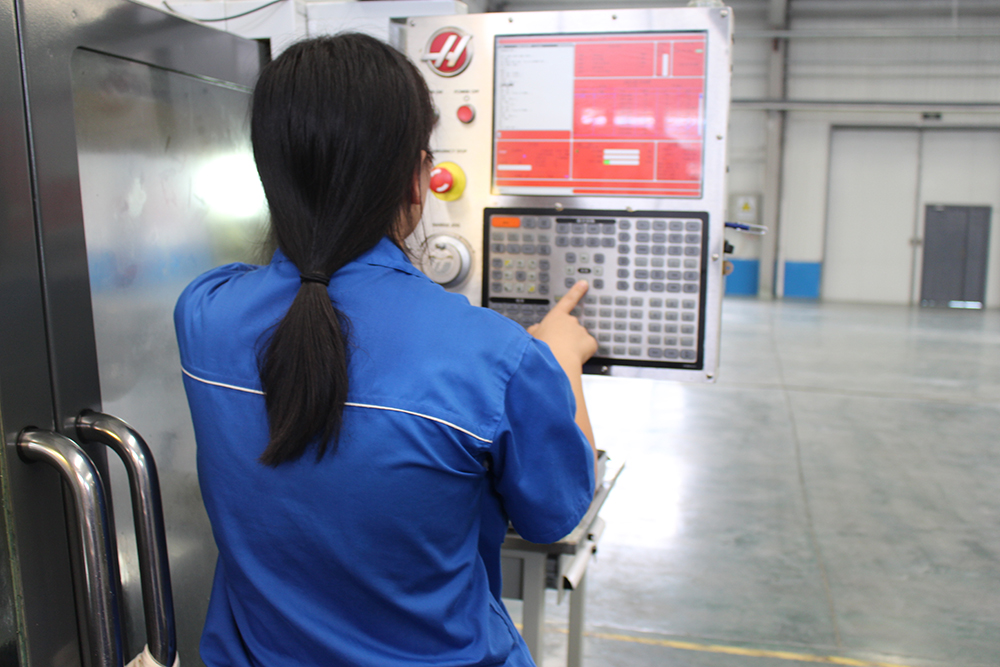
Operating within a certified QMS framework (GB/T42061-2022 idt ISO13485:2016), our production lines utilize Swiss-type multi-axis CNC machines to achieve tolerances within micrometers. Every interlocking nail features polished cannulation lines for smooth guide wire transition and precise locking holes configured for exact screw engagement.
Our facility maintains class-10,000 and class-100,000 cleanrooms for cleaning, packaging, and sterilization validation. This guarantees that implants reach the surgical theater sterile, pyrogen-free, and ready for immediate implantation.
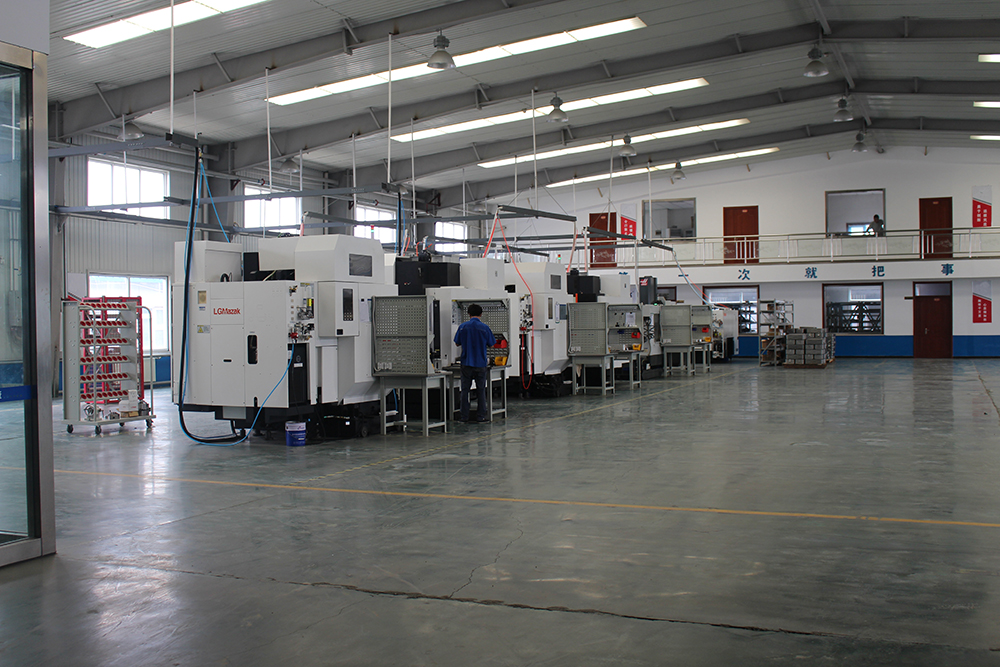
Expanding into regional markets requires an understanding of localized regulatory environments, custom clearance, and supply chain logistics. At Bopull Medical, we bridge this gap by providing regulatory documentation support (including Technical Files, Certificates of Free Sale, and Stability Test Data) to expedite registration in South America, Southeast Asia, the Middle East, and Europe.
Our logistics team manages door-to-door delivery options, compliant shipping configurations for sterile packages, and customized labeling options. With a robust customer support department boasting a 95.36% response rate and a response time of ≤3 hours, our clients receive ongoing operational and technical support.
To maintain our competitive edge, Bopull Medical invests in R&D to align our product roadmap with the future of orthopedics:
Shenzhen HUL Healthcare Technology Co., Ltd. is committed to international quality management and operational excellence.
Bopull Medical operates in accordance with international medical standards, certified under the GB/T42061-2022 idt ISO13485:2016 quality management system. We specialize in producing high-quality orthopedic implants, surgical power tools, and arthroscopic repair systems.
Our production facility integrates advanced equipment, supported by an innovative technology team. Our focus on quality has built a strong reputation across the international healthcare community. We deliver custom OEM/ODM services, ensuring our implants and instruments meet the regulatory standards of our clients' local markets.
| Verification & Corporate Directory Data | |
|---|---|
| Company Name | Shenzhen HUL Healthcare Technology Co., Ltd. (Bopull Medical) |
| Quality Management System | GB/T42061-2022 idt ISO13485:2016 International Standard Certification |
| Total Annual Revenue | US$1 Million - US$2.5 Million |
| Total Employees | 301 - 500 People |
| Country / Region | Beijing, China (Operations in Shenzhen) |
| Business Type | Trading Company & Manufacturer Representative |
| Company Join Year | 3 Years |
Key information regarding clinical applications, material selection, customization, and ordering procedures.
Explore our complete range of surgical tools, joint replacements, and high-precision orthopedic accessories.
 HUL Healthcare Limited